Roswell, New Mexico Deserves More Recognition Beyond Its Alien Reputation
Roswell, New Mexico, is known for its association with extraterrestrial life, but its connection to space exploration runs much deeper. In the 1930s, the city played host to the groundbreaking work of American physicist and inventor, Robert Hutchings Goddard.
Goddard, credited as the father of modern rocketry, moved to Roswell in 1930 with a small team of assistants. The city provided the necessary space for Goddard to safely launch his rockets, a luxury he lacked in Massachusetts where he had initially conducted his experimental flights.
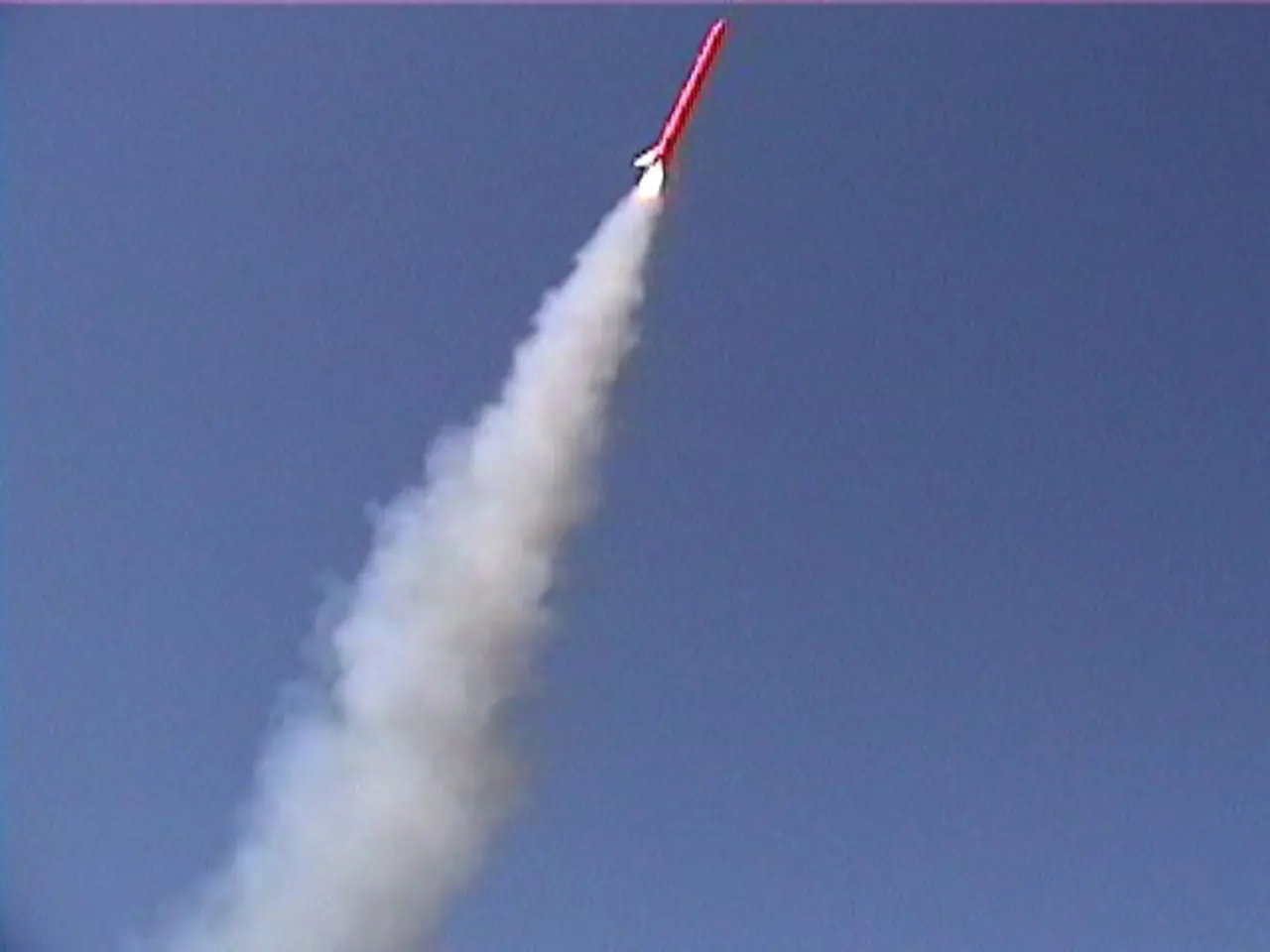
During his stay in Roswell, Goddard made significant strides in the development of liquid-fueled rockets. He designed and tested engines that used liquid propellants, which were more powerful and controllable than earlier solid-fuel rockets. This advancement was crucial in paving the way for modern rocketry.
One of Goddard's key inventions was the implementation of gyroscopic systems and steerable vanes in rocket exhaust for guidance and stability. These flight control technologies were pioneering and laid the foundations for the navigation systems used in modern rockets.
Goddard also pioneered the concept of rockets as scientific instruments. He launched scientific payloads on his rockets, including the first rocket carrying a scientific barometer, camera, and payload in 1929.
In Roswell, Goddard also developed self-cooling rocket motors and used vanes as guidance tools in his rockets. The crowning achievement of his Roswell period was a 1.7-mile-high rocket flight, a remarkable feat for the time.
Goddard's work in Roswell was supported by funding from various sources, including aviator Charles Lindbergh, the Guggenheim Fund, and the Smithsonian Institution. This funding allowed him to continue his advanced rocket engine development in relative secrecy due to earlier public skepticism.
Interestingly, the city of Roswell has themed paraphernalia and attractions related to aliens, thanks to the UFO incident of 1947. However, Goddard's work in the city predates this event and is a testament to the city's rich history in the field of space exploration.
Today, the International UFO Museum & Research Center in Roswell attracts over 200,000 people annually. While the focus may be on extraterrestrial life, it's worth remembering that Roswell's connection to space exploration is deeply rooted in the pioneering work of Robert Hutchings Goddard.
References: 1. National Air and Space Museum. (n.d.). Robert H. Goddard. Smithsonian National Air and Space Museum. https://airandspace.si.edu/exhibitions/pioneers-of-flight/people/robert-h-goddard 2. Goddard, D. (2001). Robert H. Goddard: Pioneer of Rocketry. University of Oklahoma Press. 3. NASA. (n.d.). Robert H. Goddard. NASA. https://www.nasa.gov/feature/robert-h-goddard 4. Space.com. (2010, August 3). Goddard's Roswell Rockets Paved the Way for Modern Rocketry. Space.com. https://www.space.com/15385-goddard-roswell-rockets-paved-way-modern-rocketry.html
The city of Roswell's connection to space exploration extends beyond extraterrestrial life; it was the birthplace of significant advances in modern rocketry, chiefly credited to Robert Hutchings Goddard. In the 1930s, Goddard designed and tested liquid-fueled rocket engines in Roswell, pioneering his way for future space-and-astronomy technology.